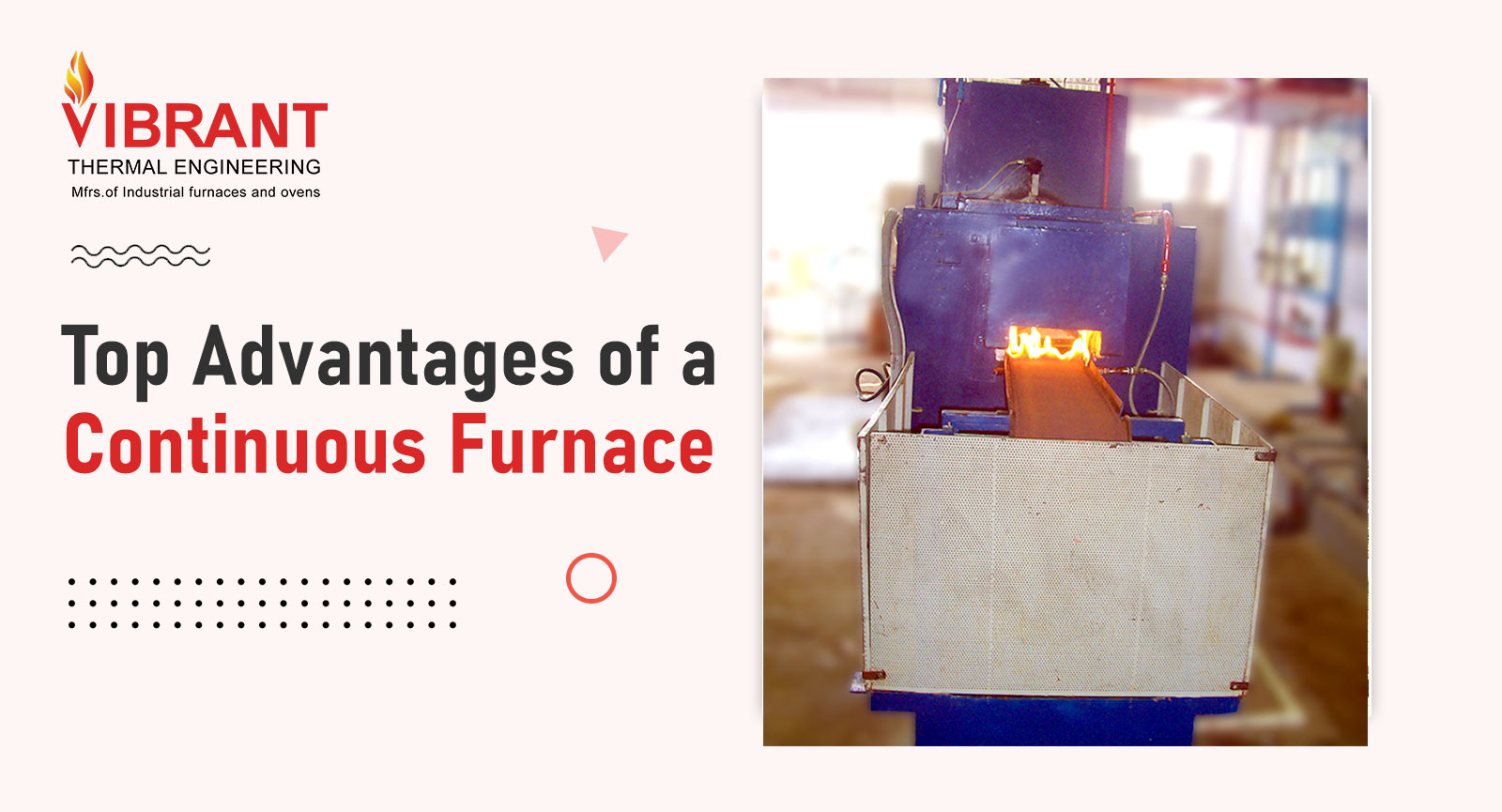
In modern industries, efficiency and productivity are very important. One piece of equipment that plays a big role in achieving these goals is the continuous furnace. This type of furnace is widely used in heat treatment processes for metals and other materials. Unlike batch furnaces, where materials are heated in separate batches, this furnace allows materials to move through the heating chamber in a continuous flow. This unique design brings several advantages. 

Here are the top benefits of using a continuous furnace:

High Productivity

One of the biggest advantages of this furnace is its high productivity. Since materials are processed continuously without stopping, there is no downtime between batches. This means more products can be treated in less time. Industries that need large-scale production, like automotive, steel, and manufacturing companies, prefer continuous furnaces because they save time and increase output.

Consistent Quality

When you are producing goods, quality matters as much as quantity. This furnace provides consistent heat treatment to all materials passing through it. This is because the temperature remains uniform throughout the process. In a batch furnace, temperature variations can occur, but in a continuous furnace, every part of the material gets equal exposure to heat. This leads to better and more uniform results.

Energy Efficiency

They are more energy efficient compared to traditional batch systems. The reason is simple—there is no repeated heating and cooling of the furnace. In batch processes, the furnace often needs to be reheated for each load, which consumes a lot of energy. In a continuous furnace, the system stays hot all the time, reducing energy waste and lowering fuel costs. This makes it an economical choice for industries.

Less Handling and Labor

In batch furnaces, workers have to load and unload materials every time a batch is completed. This increases labor costs and also slows down production. With a continuous furnace, the material moves automatically on a conveyor or roller system. This reduces manual handling, minimizes labor requirements, and decreases the chances of damage or human error during the process.

Ideal for Large-Scale Operations

If your business involves mass production, this annealing furnace is the ideal choice. It is designed for processes that run 24/7 and handle huge volumes of material. Industries such as metal manufacturing, glass, ceramics, and automotive rely heavily on this type of furnace for their operations.

Conclusion

A continuous furnace is a great investment for industries that need speed, consistency, and cost efficiency. It offers high productivity, uniform quality, energy savings, and reduced labor costs. By adopting this technology, businesses can improve efficiency and maintain a competitive edge in the market.
If you want to streamline your heat treatment process and increase output, a continuous furnace from Vibrant Thermal is the perfect solution. We are the best continuous furnace manufacturers, offering customized products on customer demands. 
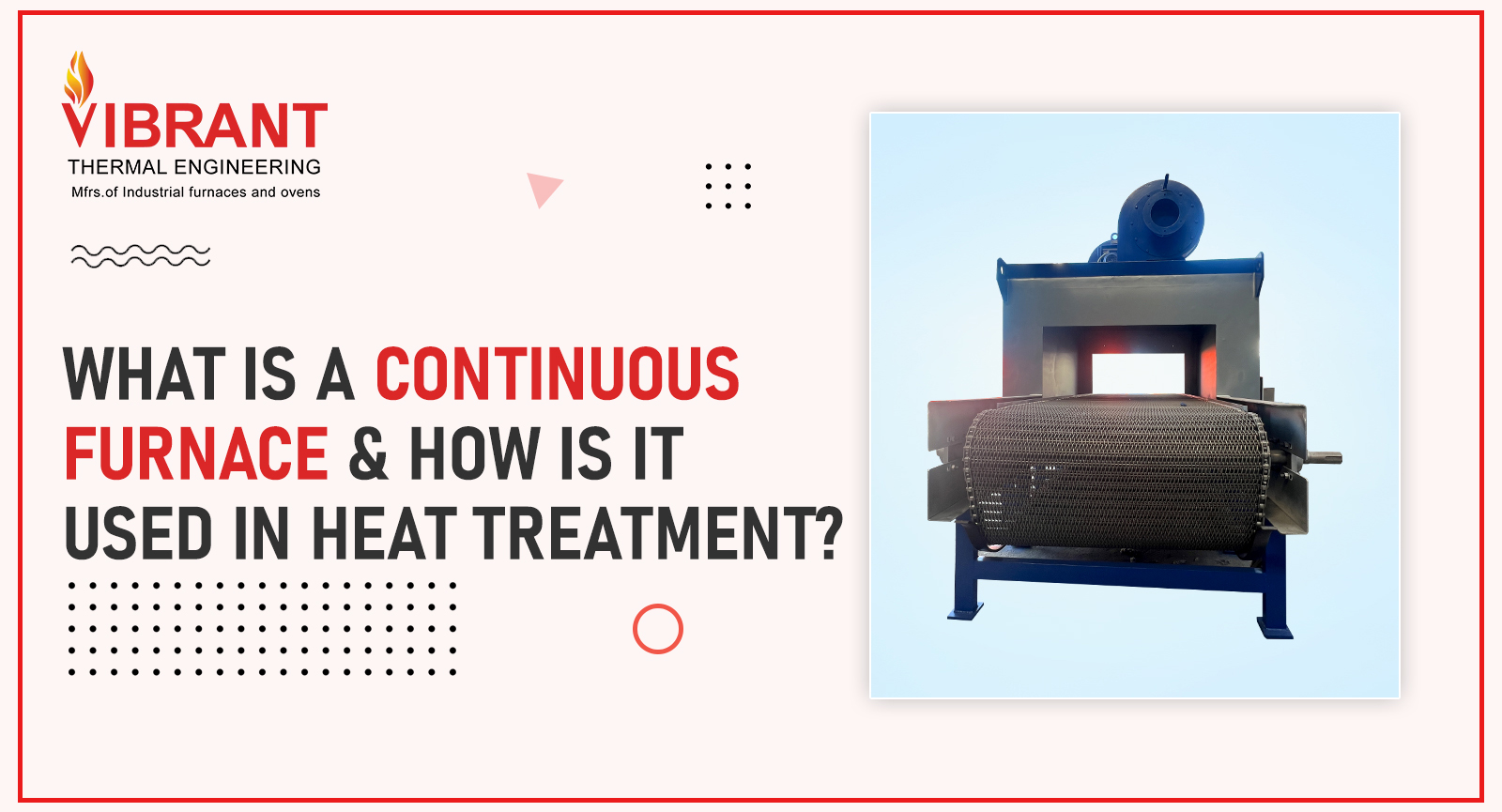
Continuous furnace is one of the types of industrial heat treatment furnaces. This heating device is used to process materials at high temperatures. It uses a cast-link or mesh-link belt to transport process material to the primary heating chamber for quick thermal processing. Learn more about this furnace in the blog. 

What is a Continuous Furnace?

A Continuous Furnace is one of many types of options you have for heat treatment processes. Even within the category of Continuous Furnaces, there is a lot of variance depending on the specifications you need and the design principles used by the Continuous Furnace manufacturers.

A Continuous Furnace features a tunnel structure and is divided into numerous regulated zones, such as preheating, binder burnout, heating, firing, and cooling.  The furnace is designed for quick drying and curing of products and is an ideal solution for medium and high-volume production. These industrial furnaces also have rapid thermal responses and consistent, steady temperature distribution.

A typical continuous furnace contains:

  • Pre-heating segment.
  • Binder burnout portion
  • Heating and firing sections
  • Cooling section

Advantages of a Continuous Furnace

1.Large and convenient production rates

Continuous furnace systems may produce very high production rates in an indexed or continuous mode.

2. Energy Efficient

Continuous furnace systems are significantly more energy efficient than other heat treatment alternatives. They are highly efficient, whether you use gas or electric equipment.

3. Low Cost

Using a continuous furnace system results in the lowest cost per item, especially when compared to alternative heat treatment processes.

4. Versatility

They can be built to incorporate some or all activities, such as washing, quenching, carburizing, nitriding, neutral hardening, nitrocarburizing, cooling, tempering, storage, and loading/unloading.

5. Customizability

While you can buy conventional furnace systems, you can also have your own bespoke system designed for you based on the amount of space you have in your factory and the sort of application you’ll be utilizing the equipment for.

Types of continuous furnaces

As previously indicated, Continuous Furnaces are quite adaptable. This is due in part to the large number of continuous furnace choices available on the market. Here are a few instances.

1. Mesh belt

A mesh belt furnace produces heat treatment results that are easily reproducible, making it an ideal piece of equipment for treating bulk commodities and large quantities of tiny parts while reducing energy consumption and increasing production uptime.

2. Rotary hearth Furnaces

Rotary Hearth furnaces are intended for reheating pretreated workpieces and carburizing shallow case depths.  They have a high throughput, making them particularly useful and appropriate for processing large amounts of the same item.

3. Endothermic generators

Endothermic generators have a modular construction and may be purchased in a variety of sizes based on your heat treatment requirements. The generator comes preconfigured with programs for your convenience, making it a simple option to use.

4. Pusher furnaces

Pusher Furnaces are perfect for the continuous processing of items in a safe gas environment. The furnace’s hearth construction is exceedingly solid and robust, allowing it to withstand exceptionally heavy loads.

How do continuous furnaces work?

Continuous Furnaces are often more complicated than batch furnaces. In a Continuous Furnace, the things move at a consistent speed. There is no need for racks or baskets, therefore, overall energy consumption is lower than in batch furnaces. 

The lack of baskets and racks also means that each item is heated individually as it moves through the furnace. The continuous process may additionally include heated zones and a cooling area at the end of the chamber. Cooling durations can be decreased since the components are spaced apart and have a smaller total thermal mass.

Final Thoughts

Vibrant Thermal Private Limited is one of the leading Continuous Furnace Manufacturers, offering a variety of continuous and batch furnaces to meet any purpose.

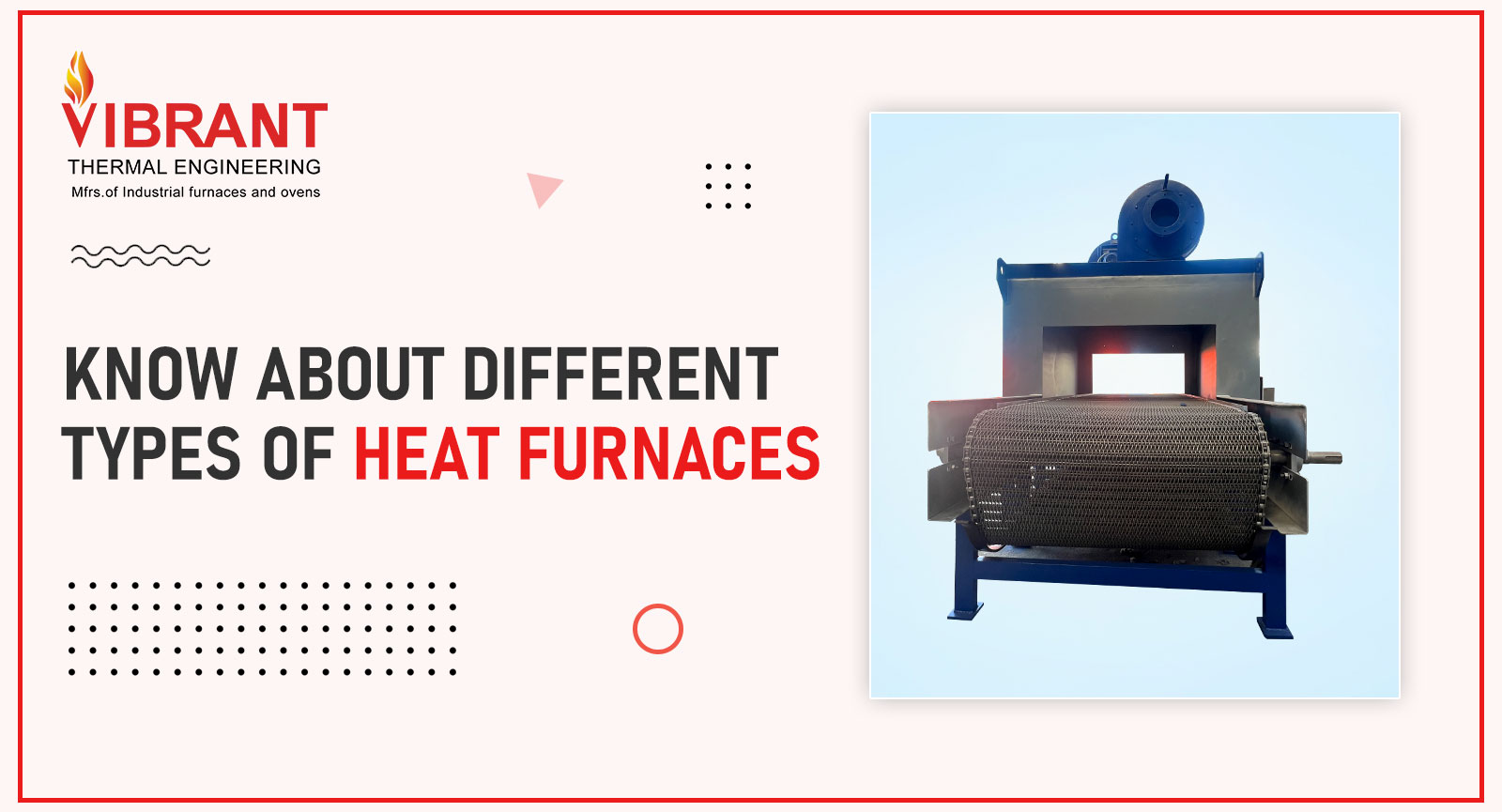
Most labs and industrial facilities use a heat treatment furnace in their daily operations, making it a vital piece of equipment in the workplace. Heat treatment furnaces are effective and adaptable equipment for high-temperature heating and convection. These furnaces are available in a variety of forms and combinations, each tailored to a specific application. Some of them include batch and continuous furnaces. If you are thinking about purchasing a heat-treatment furnace, you should know which type to acquire and which one will meet your demands. Continue reading to learn about the many types of heat furnaces.

Types of Heat-Treatment Furnaces

Continuous Furnaces

Continuous furnaces, as the name implies, are industrial heat treatment furnaces that can accommodate a constant flow of workpieces. Unlike batch furnaces, which only handle a limited number of workpieces at a time, continuous furnaces provide a continuous and uninterrupted heat treatment procedure. They are suited for large-scale production and continuous heat treatment procedures.

Continuous furnaces provide a continuous flow of workpieces through the heating chamber via a conveyor or roller system. The furnace’s heating components create the necessary heat, and the conveyor system assures a consistent flow of workpieces through the heating chamber. As the workpieces pass through the furnace, they go through the necessary heat treatment procedure.

Box/ Batch furnaces

Box furnaces, also known as batch furnaces, are flexible and commonly used for a variety of heat treatment operations. They are made up of an insulated chamber that can fit the workload while also providing regulated warmth. The box furnace’s primary function is to create a controlled heating environment for various heat treatment operations.

Unlike Continuous Furnaces, batch furnaces use a single chamber for heating and cooling, known as the batch. The batch is stationary, so changes in the furnace atmosphere occur in near-equilibrium conditions. One frequent application for batch furnaces is to heat a collection of big, heavy components from room temperature to a particular set point before lowering them in a controlled way.

Natural Gas Furnace

The most prevalent form of furnace in today’s houses is a natural gas furnace, which connects to a municipal gas line and runs via central air ducts. Gas jets along a burner ignite to produce hot combustion gas, which elevates the temperature of the air and is subsequently circulated through the ducts by fans. When compared to other types of furnaces, gas heating is the most cost-effective since natural gas is often less expensive than oil and electricity.

Natural Gas Furnace

The most prevalent form of furnace in today’s houses is a natural gas furnace, which connects to a municipal gas line and runs via central air ducts. Gas jets along a burner ignite to produce hot combustion gas, which elevates the temperature of the air and is subsequently circulated through the ducts by fans. When compared to other types of furnaces, gas heating is the most cost-effective since natural gas is often less expensive than oil and electricity.

Oil Furnace

If you don’t have access to natural gas, you could have to fuel your furnace with oil. Oil furnaces are most typically utilized in cold areas, particularly in the northeastern United States. They convert oil to heat. While oil furnaces are less energy efficient than gas furnaces, they are still an effective way to heat your house.

Electric Furnace

If you do not have a natural gas line running into your home, an electric furnace might be a great alternative. These systems employ electric heating elements to warm the air and distribute it throughout the house’s ducting. Electric furnaces are often less expensive to purchase upfront and smaller than traditional furnaces, making them easier to fit into most locations. Electric furnaces, like oil furnaces, are far less efficient, but they might be a good alternative if your options are restricted.

Atmospheric furnace

During the heating and cooling operation, an atmosphere furnace surrounds the task with a “protective” environment. The most frequent furnace atmosphere is air. An air environment is commonly employed in low-temperature tempering processes. In this situation, visual appeal is usually unimportant since the air environment exposes the material to challenges such as oxidation, which affects its surface or skin.

Choose the Perfect Heat Treatment Furnace.

A heating chamber or heat treatment furnace is required to complete tasks in different industries. As a result, you must select the appropriate type of furnace for your workplace or project. Check out our wide range of heat treatment furnaces including continuous furnaces.

Contact Vibrant Thermal Engineering, immediately if you have any questions about furnace installation, maintenance, or repair. Don’t forget to inquire about our high-efficiency home heating systems to help you save money on your energy costs.