
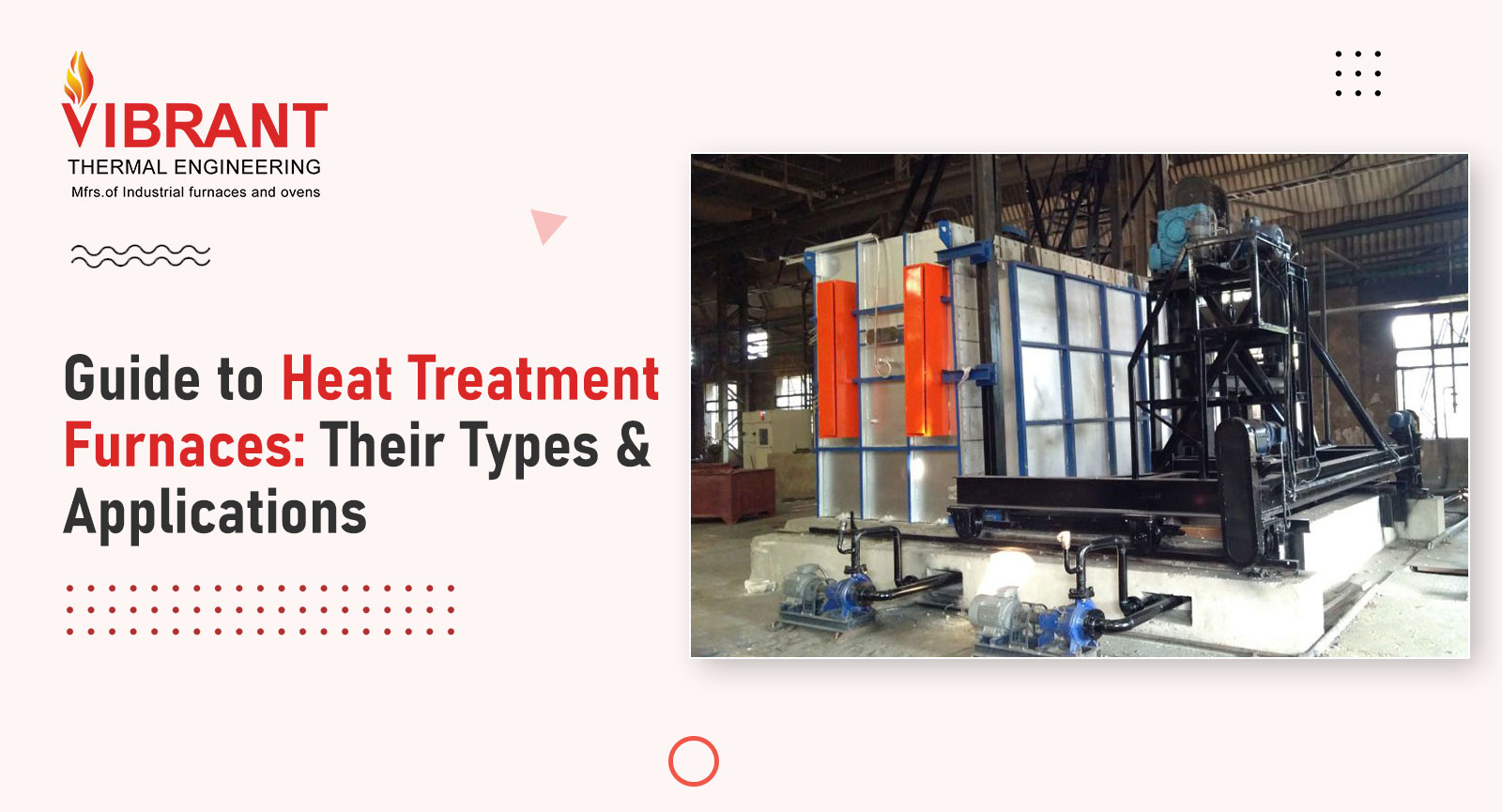
A heat treatment furnace is a piece of equipment that uses both heating and cooling to achieve heat treatment. Heat treatment may enhance the structural integrity of metallic materials and impart new qualities to them. Heat treatment methods in a furnace include hardening, tempering, annealing, and normalising. This blog provides an in-depth description of heat treatment furnaces, including their types and applications.
What is a heat treatment furnace?
A furnace is equipment that can manage the heating and cooling of workpieces. Heat treatment is a method that enhances quality by heating and cooling workpieces, modifying the material’s intrinsic characteristics without affecting its shape.
Heating, soaking, and cooling the workpiece after heating are key operations in heat treatment, and they must be managed. As a result, a heat treatment furnace is constructed with a structure that allows for a variety of heat treatment-specific heating, soaking, and cooling operations.
Types of Heat Treatment Furnaces
Batch Furnaces
These furnaces execute heating, soaking, and cooling individually, with just one operation taking place at a time. Heating takes place inside the furnace, and soaking might also occur if necessary. The portions are then taken out of the oven to cool. This technology is appropriate for small batch manufacturing and involves the use of trolleys, rollers or conveyors to load into the furnace and unload for cooling.
Continuous furnaces
These heat treatment furnaces heat, soak, and cool workpieces continuously within the same furnace, making them ideal for large-scale manufacturing. The continuous furnace contains separate processing chambers for each stage, and workpieces that have finished one step (e.g., heating) are moved to the next step (e.g., soaking), followed by cooling. Continuous furnaces are especially ideal for treating lengthy items like wire and tube since they are extremely efficient at processing these materials.
Combustion furnaces
They can provide direct or indirect heating by the burning of heavy oil or gas (burner or combustion gas). In addition to direct heating using burners, high-temperature combustion gases are pumped into the boiler from an external source. The sort of heat source used during heat treatment varies based on the atmospheric gases inside the boiler.
Electric furnaces
They can be heated using resistance, high-frequency induction, arc, electron beam, or plasma. In addition to heating by transferring current via electrical resistance, electric furnaces employ heat sources for specialised procedures such as high-frequency hardening or laser hardening.
Applications of Heat Treatment Furnaces
- Heat treatment furnaces are used in several sectors, including:
- Automotive: Increase the durability of engine and gearbox components.
- Aerospace: Increase the robustness of critical aircraft components that operate in hostile environments.
- Tool and Die Making: Fatigue resistance for cutting tools and dies.
- Construction involves toughening structural parts such as building beams and bridges.
- Defence and Military: Ensure the dependability of weaponry and military equipment.
Conclusion
Heat treatment furnaces can handle and regulate complicated operations using a range of equipment. Quenching, tempering, annealing, and normalising are all heat treatment operations, and furnaces are specifically constructed for each. It is critical to choose the correct furnace based on the heat treatment method required.
Vibrant Thermal Engineering, one of the leading heat treatment furnace manufacturers, can supply you with a customised product for your application based on our expertise.