
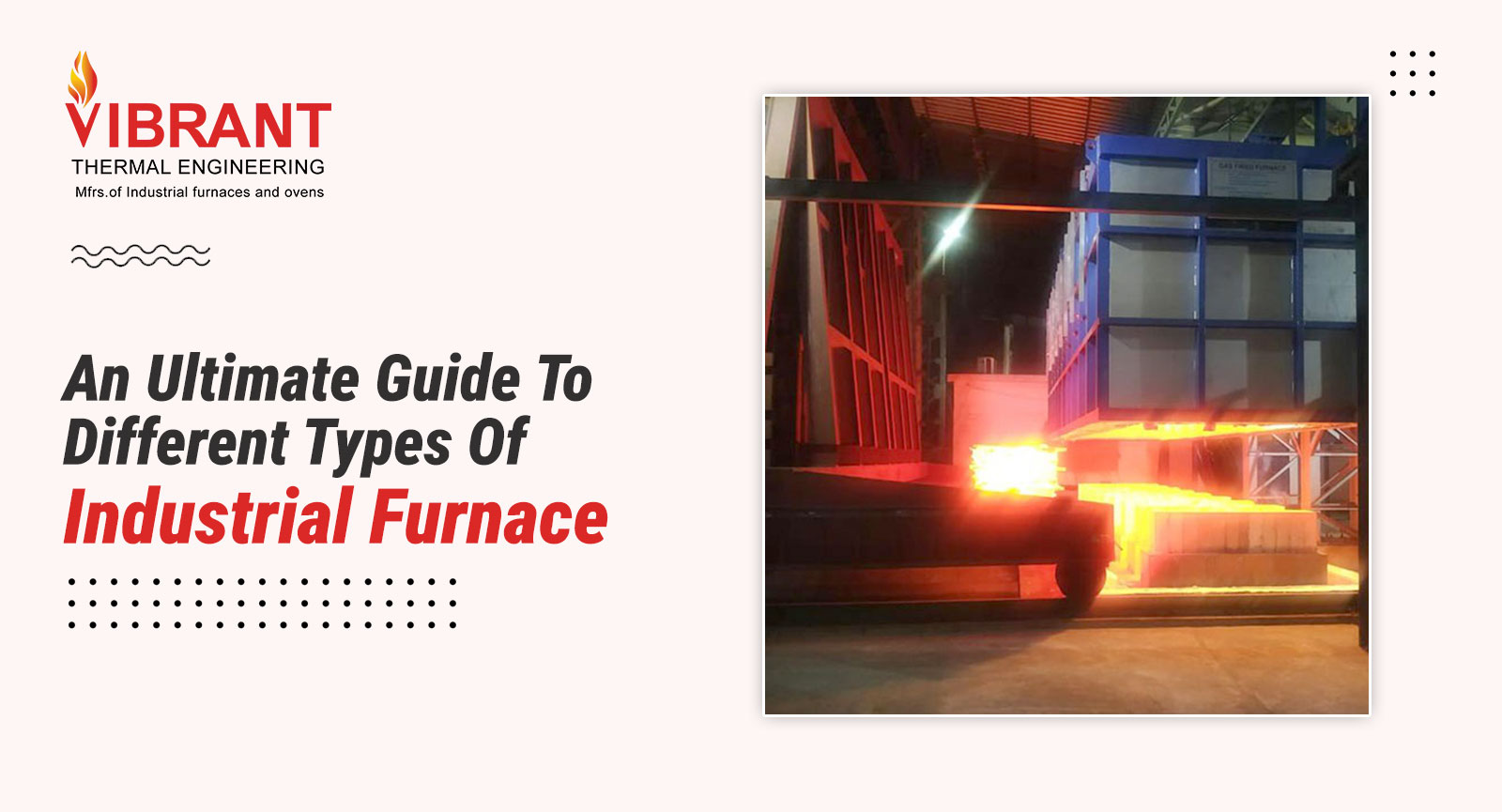
An Industrial Furnace is widely used in manufacturing plants for important processes. It melts, softens, or treats materials to turn them into something useful. Choosing the right one is a very daunting task. If you get the wrong fit for your specific material, you’re looking at massive fuel bills, ruined batches, and a lot of wasted time.
For industries, the furnace is a long-term investment. You need something that doesn’t just get hot, but stays consistent shift after shift. Whether you are in metalworking, glassmaking, or ceramics, understanding the nuances of heat treatment is what separates a profitable year from a maintenance nightmare. In this post, we will discuss different types of furnaces and their uses in different sectors.
What Exactly is an Industrial Furnace?
In simple terms, it is an enclosed space used to provide high-level heat to raw materials. Unlike a regular oven, these machines can reach temperatures well over 1,000°C. They are designed to change the physical properties of metals or minerals, which makes them stronger, more flexible, or even liquid, so they can be cast into molds.
Industrial Furnace Types Explained Below
Not every process needs the same kind of heat. Some processes need a quick blast, while others need a slow, steady soak for hours. This is why you’ll see several furnace types on a factory floor, each with a very specific job to do.
Box Furnaces:
These are the most common. They look like a large box and are great for batch processing, where you load the material, heat it, and take it out.
Bogie Hearth Furnaces:
If you are dealing with massive, heavy loads, this is your go-to. The “hearth” (the floor) sits on a track like a trolley. You load it outside, roll it in, heat it, and roll it back out. It makes handling heavy steel parts much safer.
Pit Type Furnace:
These industrial furnaces are installed below ground level. They are perfect for heating long shafts or vertical components because they save floor space and provide excellent temperature uniformity for long parts.
Continuous Furnaces:
If you have a massive production line, you can’t stop and start. These furnaces use a conveyor belt to move parts through different heat zones without stopping.
Annealing Furnace:
When you need to make a metal softer or more workable, annealing is the process. These industrial furnaces heat the material to a specific point and cool it slowly to remove internal stress.
Bell Furnace:
Shaped like a giant bell, this furnace is lowered over the load. It is widely used for annealing and other heat treatments where you need tight control over the atmosphere and temperature.
Quenching Furnace:
Heating is only half the job. Quenching furnaces are used to rapidly cool parts in oil or water to lock in the hardness.
Conclusion
At the end of the day, your production line is only as reliable as the equipment you put in it. You need a furnace that is built for daily industrial use. Vibrant Thermal Engineering is a leading brand that manufactures and sells industrial furnaces. Our furnace units are engineered for maximum fuel efficiency, rock-solid durability, and incredibly accurate temperature control.
Whether you are looking to buy in bulk for a large-scale foundry or need a specialized furnace for a high-tech lab, we can build exactly what you need. Reach out to us today and let the experts help you find industrial furnace types that actually help your business grow.
