Introduction
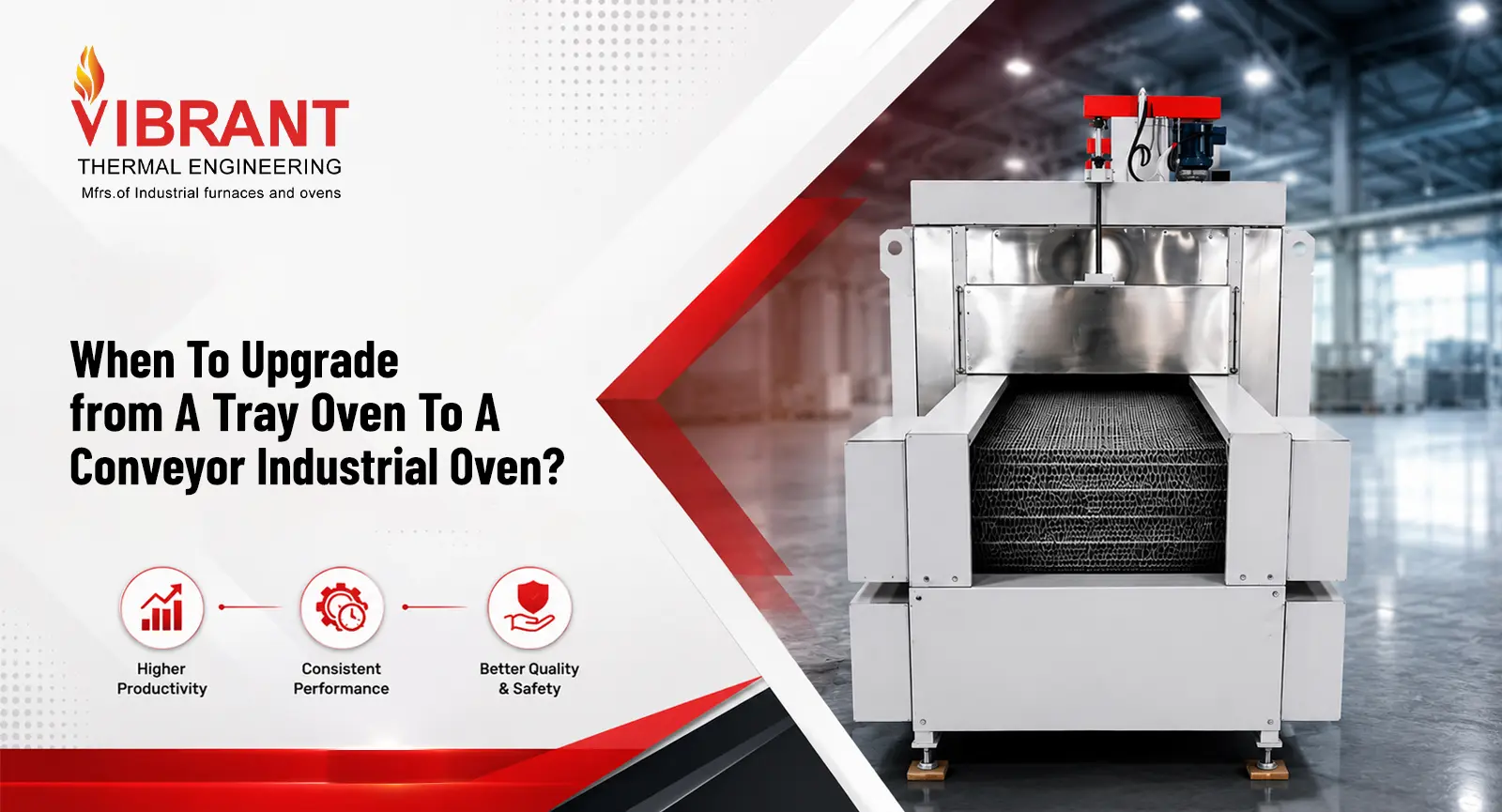
A tray oven works until it does not. For many facilities, the moment it stops being enough is not a single event. It shows up gradually as throughput targets become harder to hit, manual handling time eats into production hours, and the gap between what the oven can process and what the production line demands keeps widening. This post covers the signs that a tray industrial oven has reached its limit, what a conveyor oven actually changes, and how to decide whether the upgrade makes sense for the specific way your facility runs.
What Makes a Tray Oven the Right Starting Point?
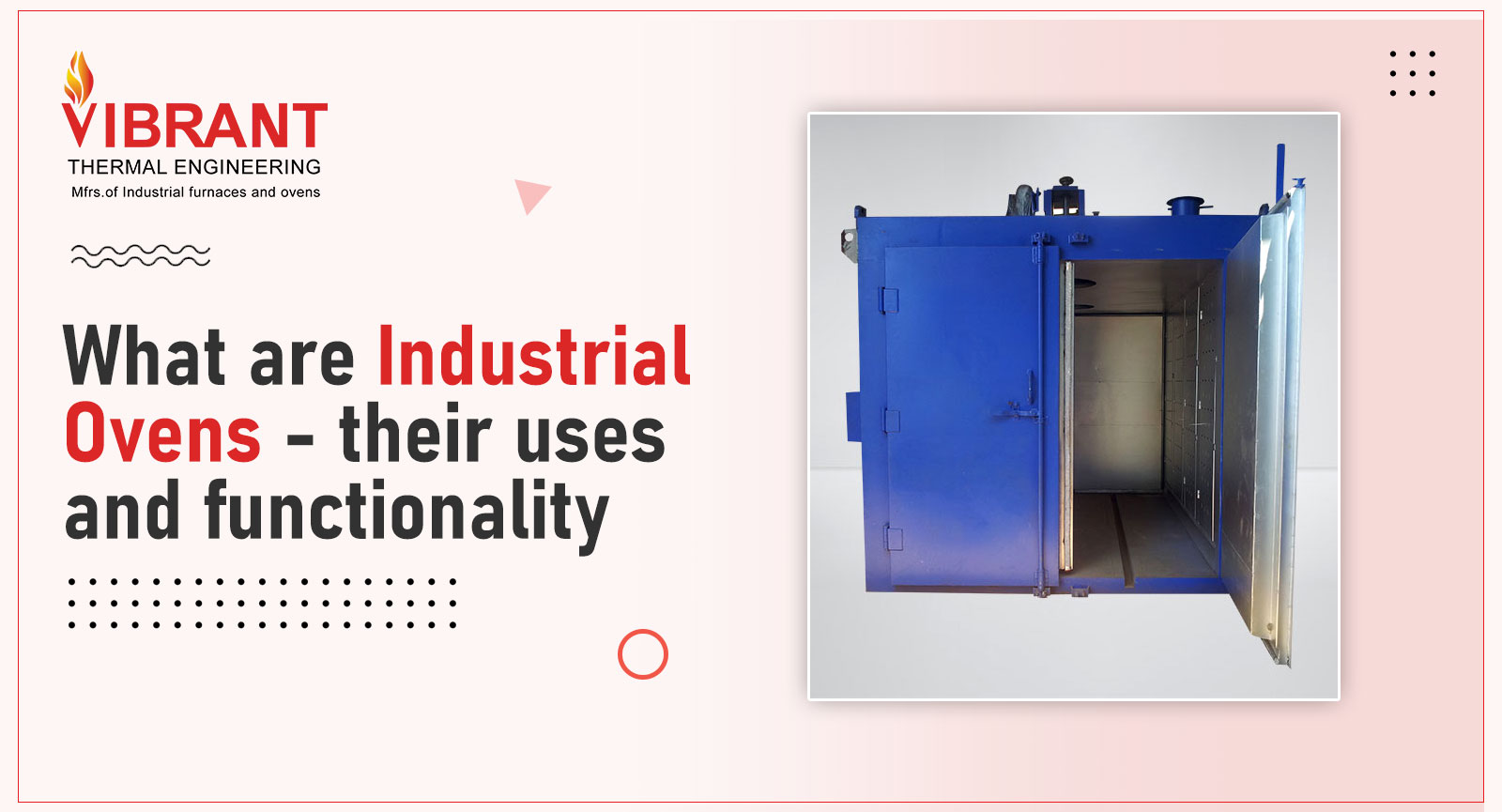
A tray oven, also called a batch or cabinet oven, loads a fixed quantity of product, runs a heat cycle, and then unloads before the next batch goes in. It is straightforward, flexible, and well-suited to operations where:
Product variety is high and each batch may need different temperature profiles. Production volumes are moderate and throughput is not the primary constraint. The operation runs a mix of part sizes, shapes, or materials that do not lend themselves to a continuous line.
Cabinet ovens in this category run up to 450 degrees C with programmable or PID temperature control, single or dual airflow direction, and chamber sizes customised to the product range. Temperature uniformity within ±3 to 8 degrees C across the chamber keeps results consistent batch to batch.
For many operations, a tray oven is genuinely the right piece of equipment. The question is whether the production requirements have moved beyond what batch processing can efficiently support.
The Signs a Tray Oven Is No Longer Keeping Up
The oven is the production bottleneck. If parts are waiting for the oven more often than the oven is waiting for parts, the batch cycle time is limiting throughput. Adding another tray oven addresses volume but doubles the manual handling and floor space requirement without solving the efficiency problem.
Manual handling is consuming too much labour. Loading trays, unloading product, moving carts in and out of the chamber, these tasks add up across a shift. In a high-volume environment, that labour cost is real and recurring.
Temperature consistency across the batch is becoming difficult to control. Larger batches in a tray oven can result in parts at the edge of the chamber experiencing different conditions than parts in the centre. As production volumes increase, manufacturers often need a more efficient heating solution than a traditional tray oven. Choosing the right industrial oven solutions can improve temperature uniformity, reduce manual handling, and support continuous production requirements.
The production line is already continuous but the oven is not. When upstream and downstream processes run continuously but the oven operates in batch cycles, it creates a stop-start rhythm that disrupts the flow of the whole line.
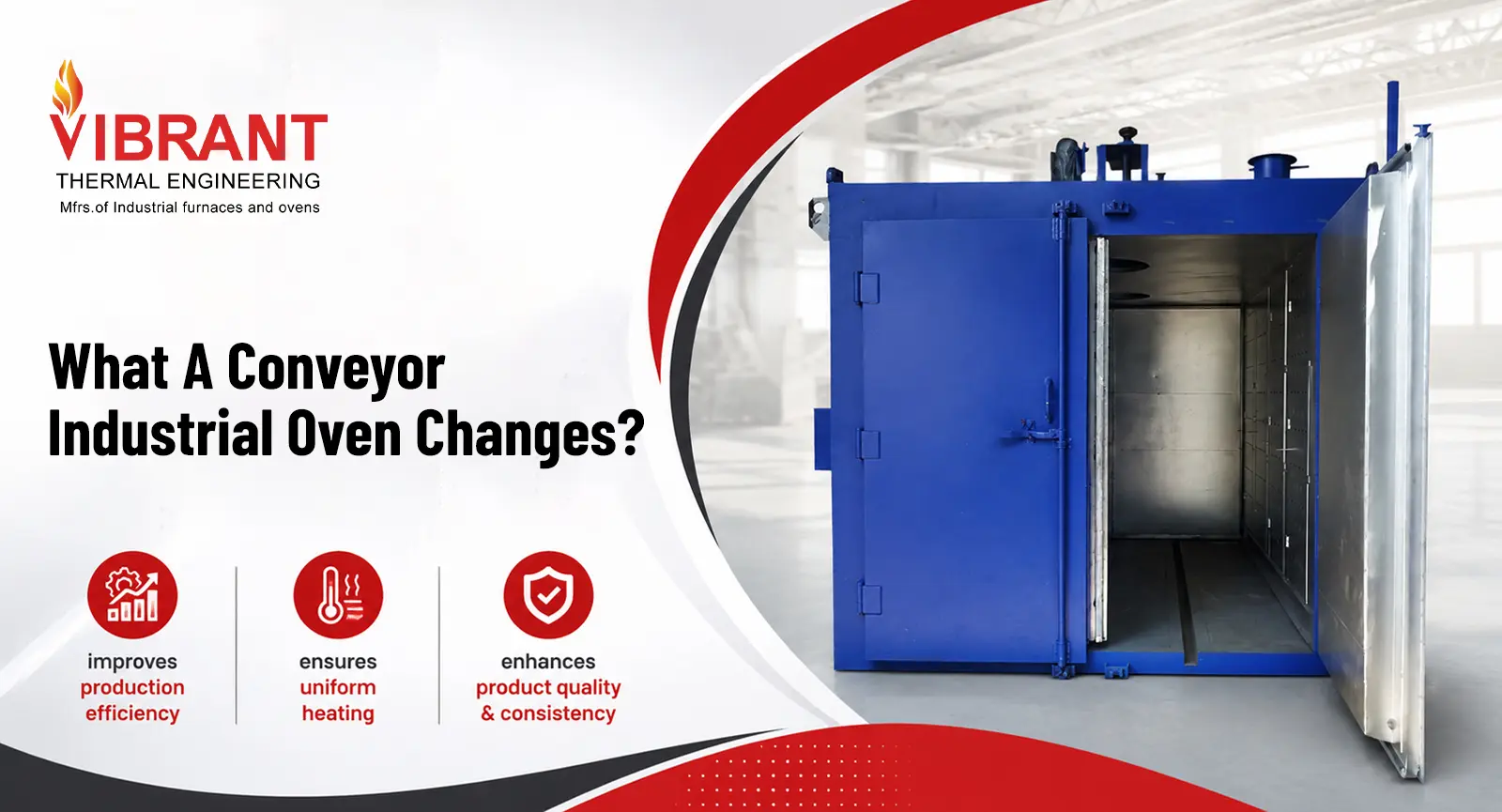
What a Conveyor Industrial Oven Changes?
Applications That Benefit Most From the Switch
The upgrade makes the most sense when:
The product is uniform in size and shape and suits a continuous belt or conveyor system. Production runs single-shift or multi-shift with consistent high volume. The process requires tight, repeatable heat exposure times rather than variable soak periods. The downstream process can accept a continuous feed of product rather than batch quantities.
Industries where this combination regularly applies include automotive manufacturing, powder coating lines, electronics and semiconductor fabrication, aerospace composite curing, and aluminium industry heat treatment.
Conclusion – What to Consider Before Upgrading?
Floor space and facility layout. A conveyor oven requires a different footprint than a batch oven. The length of the oven is determined by the required heat exposure time and belt speed, so the available floor space needs to accommodate that before the specification is finalised.
Product handling compatibility. Not every product suits a belt or conveyor. Parts that are fragile, irregular in shape, or need to be oriented in a specific way during processing may need fixture design work before a conveyor oven is practical.
Capital cost versus operational savings. The upfront investment in a conveyor industrial oven is higher than a batch unit. The justification comes from reduced labour, higher throughput, and lower per-unit processing cost over the operating life of the equipment.
Vibrant Thermal Engineering has been manufacturing industrial ovens and thermal processing equipment from Chennai since 2007, with an ISO 9001-2015 certified process and a range covering batch, curing, ageing, core drying, double chamber, and conveyor configurations up to 450 degrees C. As experienced Industrial Oven manufacturers, the team works through the specification with each client before recommending a configuration.