Table of Contents
Introduction
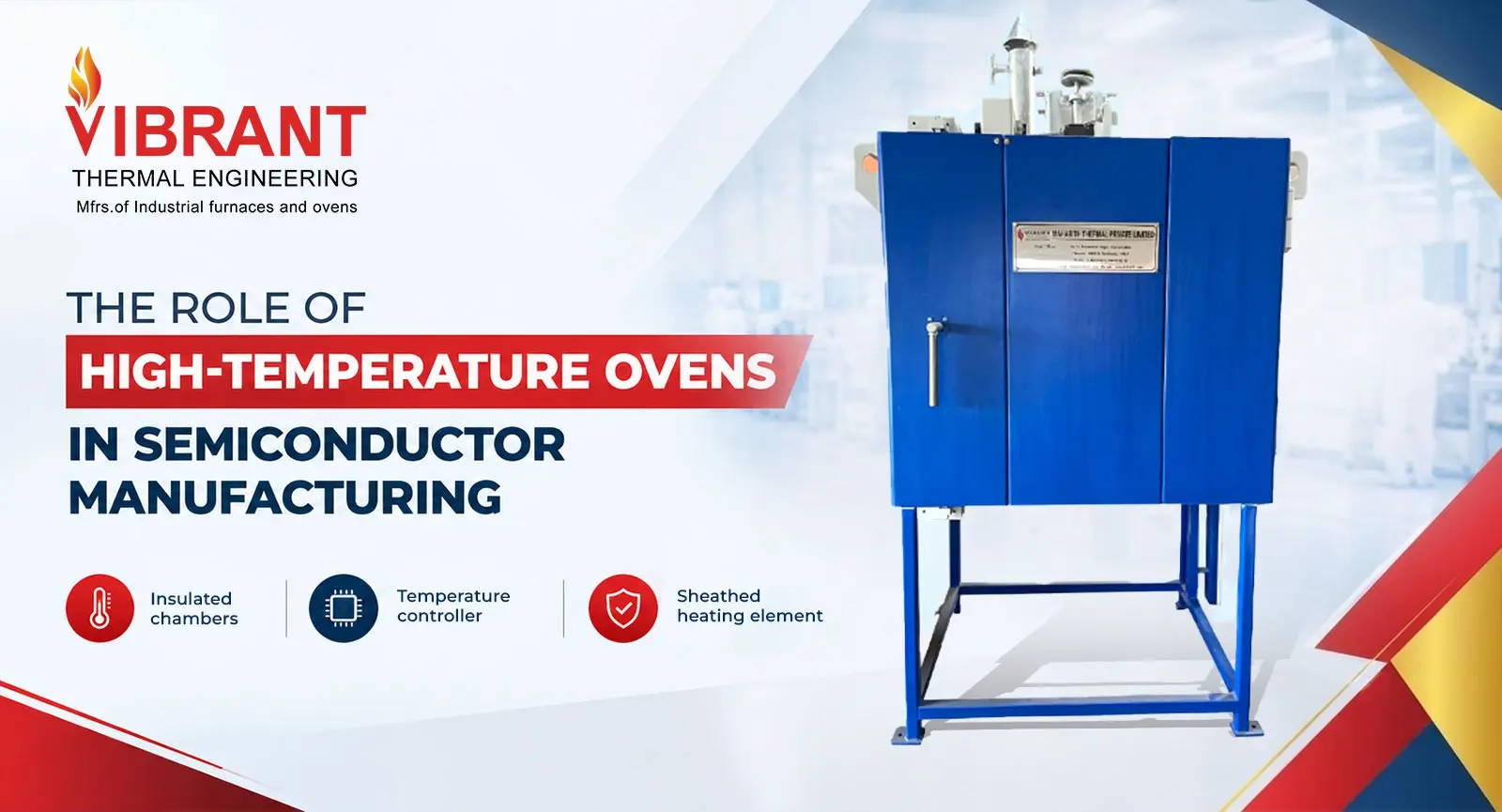
Silicon does not become a chip in one step. A wafer moves through hundreds of operations, and a number of them involve nothing more than just being placed at a controlled temperature for a fixed length of time. Polyimide layers need curing, die attach adhesives need to crosslink, and incapsulants need post-mold cure. Packaged devices need burn-in and stress baking before anyone ships them. The equipment doing that work is the high-temperature oven, and in semiconductor plants it carries requirements that would look excessive anywhere else. An industrial oven used for powder coating can drift a few degrees without consequence. The same drift inside a polyimide cure chamber produces cracked films, colour variation, and wafers that fail electrical tests. This article discusses the different types of ovens used in different processes, what separates a semiconductor-grade unit from a standard industrial one, how uniformity connects directly to yield, and what to check with a High Temperature Oven Manufacturer before you buy one.Where Heat Enters the Semiconductor Process
Thermal processing shows up at both ends of chip manufacturing, and the demands change depending on where you look. The following are the places where heat enters the process: ]
1. Front End Wafer Processing
On the wafer side, ovens handle dielectric and photoresist curing. Polyimide films get spin-coated, soft-baked at somewhere around 100°C to 150°C to drive off solvent, then hard-cured at 350°C to 400°C to lock in their mechanical and electrical properties. That cure almost always runs under nitrogen, because oxygen present at high temperature oven degrades the film chemistry.
2. Back End Packaging and Assembly
Packaging is where oven count multiplies. Die attach epoxies cure in batch or conveyor ovens. Underfill for flip chip devices needs a controlled ramp and soak. Post-mold cure holds encapsulated packages at temperature for several hours. Burn-in chambers run finished devices hot under electrical bias to force early life failures out before shipment.
The common thread across all of it is that heat is not the goal, but repeatability is. The oven exists to deliver the same thermal profile to the thousandth load as it did to the first.
What Makes a Semiconductor Grade High Temperature Oven Different
A general-purpose industrial oven and a semiconductor process oven can look similar from the outside. The differences are in details that only matter when your product is measured in microns. Here is what actually separates them:- Cleanliness of the recirculated air. Process ovens for wafer work run HEPA-filtered recirculation and hold ISO Class 5 (Class 100) conditions inside the chamber, sometimes tighter. A particle settling on a wafer during a four-hour cure becomes a defect.
- Inert atmosphere capability. Nitrogen purging brings residual oxygen down to 20 ppm or lower in well-built units. Without it, polyimide and epoxy chemistry shifts, and surfaces oxidise.
- Chamber materials and surface finish. Electropolished 316 stainless interiors resist outgassing and clean easily. Painted mild steel does neither.
- Programmable ramp and soak control. Placing a wafer directly into a preheated 400°C chamber induces thermal shock and cracks the film. Controlled ramping, often limited to around 15°C per minute, prevents it.
- Solvent exhaust and condensate management. Solvents driven off during bake will condense in exhaust ductwork and drip back onto product if the oven is not designed to trap them.
Key Applications of High Temperature Ovens
Heat shows up at several points in chip production, and each one asks something different of the oven running it. Key applications of these ovens are:- Dopant diffusion and drive-in. A furnace drives implanted dopant atoms to the correct depth and repairs implantation damage, typically between 800°C and 1200°C.
- Thermal oxidation. Growing a silicon dioxide layer for gate insulation or isolation happens in a controlled oxygen or steam atmosphere, where a small variance can push thickness out of spec.
- Polyimide and photoresist curing. Coated wafers need a slow, even bake to drive off solvents without cracking the film, usually between 200°C and 400°C.
- Wafer bake and dehydration. Wafers get baked before certain coating steps to remove surface moisture that would otherwise interfere with adhesion.
- Burn-in testing. Finished devices run at elevated temperature to force early failures out before reaching a customer, protecting reliability rather than shaping the chip itself.
What Makes an Oven Suitable for Semiconductor Work
A general-purpose industrial oven and one built for a fab share a heating element and not much else. The differences come down to a few specific requirements that a capable High Temperature Oven Manufacturer builds in from the start rather than adding on as an afterthought. Here are some of the things that make an oven the right choice for semiconductor work:- Temperature uniformity: Semiconductor-grade ovens typically hold ±1°C to ±2°C across the chamber, since even a small hot spot can push part of a batch out of specification.
- Low-particulate construction: Interior surfaces, seals, and airflow paths shed as little particulate as possible, since a single contaminant on a wafer can ruin a device.
- Controlled atmosphere: Many processes need nitrogen purging or a low-oxygen environment to prevent oxidation during curing.
- Precise ramp and soak control: Recipes specify how fast temperature should rise, how long it should hold, and how it should cool, and the controller must repeat that profile every time.
- Cleanroom compatibility: Equipment near a cleanroom must meet its own particulate and outgassing standards, ruling out otherwise capable ovens.
Conclusion
Thermal processing rarely gets the attention that lithography or etch receives, yet it is important in deciding whether devices survive their first year in the field. Get the atmosphere, uniformity, and control strategy right, and the high-temperature oven stops being a variable in your process. Vibrant Thermal Engineering builds industrial ovens around that principle, engineered to the application rather than the catalogue. Specify carefully once, and thermal steps become the part of the line nobody has to think about again.
FAQs

Vibrant Thermal Engineering
Vibrant Thermal, established in 2007, is a leading industrial furnaces & ovens manufacturing organization that offers a one-stop solution to every industrial furnaces & ovens need.
