
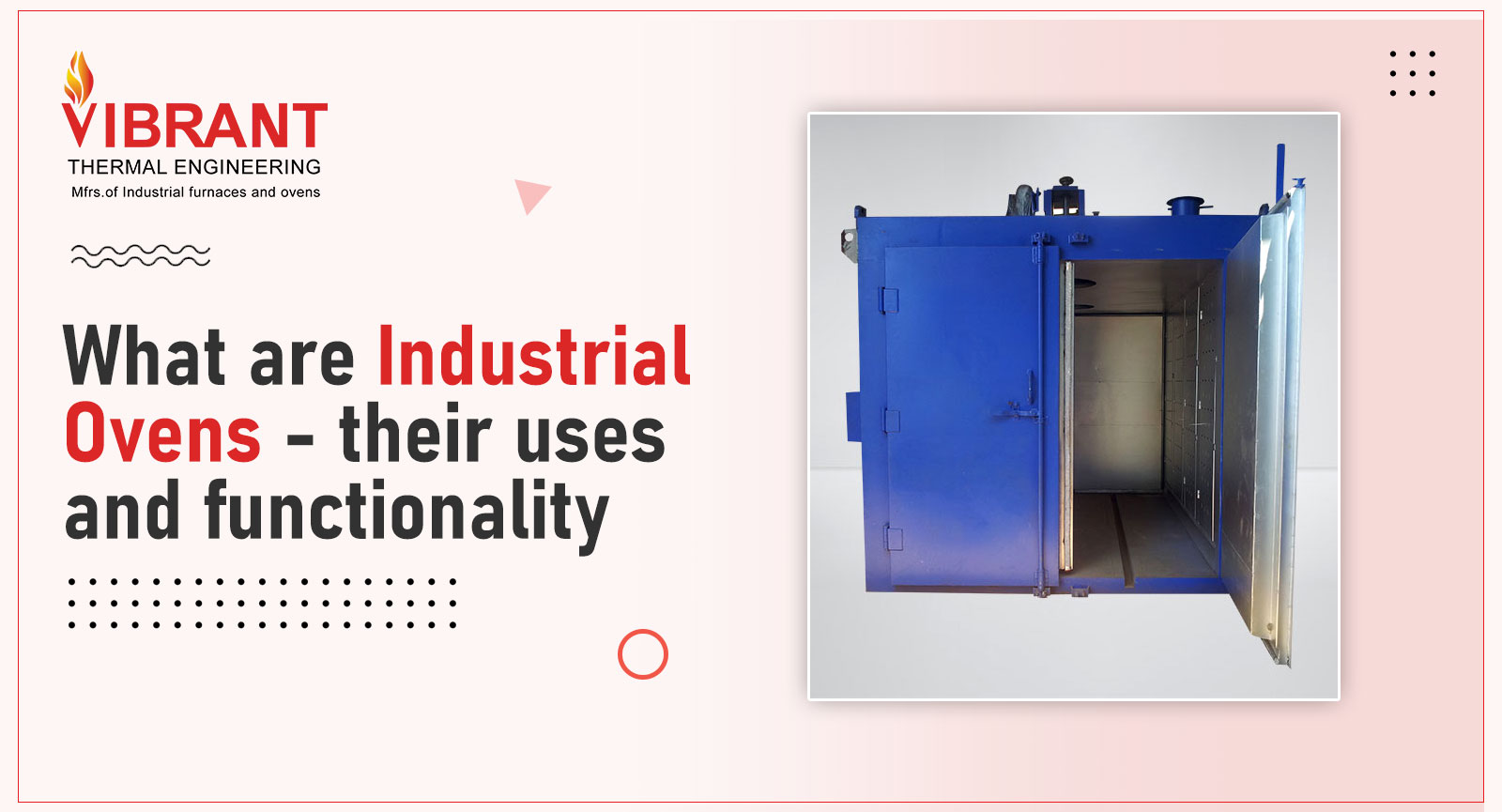
Industrial ovens are adaptable and multifunctional in nature. Commercial ovens are very efficient and may be used for various purposes, including moisture removal, curing, and baking of various products. Depending on the nature and specifications of your application, you may select the best type of oven.
Some common oven varieties include;
- Drying oven
- Baking oven
- Heating oven
- Conveying oven
- Batch oven
- Curing oven
- Rotating oven
- Powder coating oven
These ovens are ideal for both bulk and batch entry. You can use the oven’s heating chamber to dry/cure sections of a product or the finished product. Let us look at the distinctive qualities of these ovens.
Different Features of Industrial Ovens:
- Because of their distinct characteristics, these ovens are used in a wide range of sectors. Some of the features include:
- Standard ovens are appropriate for heavy-duty applications.
- An oven’s structure allows for adequate air flow throughout the chamber.
- With a temperature capability of up to 500°F, this oven can successfully dry items in little time while utilizing moderate electricity.
- The homogeneous spread of air in an oven allows items to be treated similarly from all sides.
- Before being delivered, a standard industrial oven must pass a series of safety tests and inspections. This measure helps to avoid any possible mishap.
- This oven constantly delivers synchronous heat regardless of the product’s size, shape, or volume.
- Certain ovens (conveyor type) can handle more than one heavyweight or high-volume product at a time.
Uses of Industrial Ovens
1. Pharmaceuticals.
In the pharmaceutical industry, ovens are used to bake coatings on tablets and as an oxidizer to remove excess chemicals and debris.
2. Heating Treatment.
As we all know, heat-treating involves aging, stress alleviation, tempering, and annealing metals at regulated temperatures. Tempering reduces a metal’s brittleness, whereas stress alleviation alleviates structural, residual, and thermal stress. Furthermore, aging replicates the effects of usage, whereas annealing enhances the ductility of metals.
3. Sterilization
Industrial ovens are also used to sterilize medical equipment and tools. The medical business demands equipment with precise temperature control to remove germs, pathogens, and viruses. The precise controls of ovens are perfect for the needed settings and yield excellent results.
4. Burn-In Testing.
Industrial Ovens perform extensive static and dynamic burn-in testing on integrated circuits and electronic devices such as laser diodes. They frequently use difficult and hazardous circumstances to identify any faults in a product, particularly electrical circuits.
5. Sintering.
Industrial ovens can condense and bind materials below their melting point, which is a method utilized in injection molding and metallurgy. The sintering process increases a material’s strength and density.
Conclusion
Vibrant Thermal Pvt. Ltd. provides you with the best quality Industrial Ovens, which are extremely affordable. We remain a sought-after manufacturer and supplier of reliable and energy-efficient ovens that deliver high-quality output. For further queries about our ovens, contact us today.
