
Table of Contents
What Tempering Actually Does to a Metal
Before getting into the equipment itself, it helps to understand why tempering matters. When steel is hardened, it becomes strong but often too brittle to actually use — it can crack under stress instead of bending or absorbing impact. Tempering fixes this by reheating the hardened metal to a specific, lower temperature and holding it there before cooling it again in a controlled way.
The result is a component that keeps most of its hardness but gains back the toughness that pure hardening takes away. This is why a tempering furnace isn’t optional in most metal processing lines — skipping this step, or getting the temperature and timing wrong, is one of the most common reasons parts fail earlier than expected.
Types of Tempering Furnaces
Not every tempering job looks the same, and manufacturers have developed several furnace designs to match different production needs, part sizes, and batch volumes.
- Box or chamber furnaces — a straightforward, front-loading design suited for smaller batches and components that don’t need special handling
- Continuous furnaces — parts move through the furnace on a conveyor or roller system, ideal for large-scale, ongoing production rather than individual batches
- Well type or pit type tempering furnaces — installed into the ground and loaded vertically from above, built specifically for long or heavy components
- Vacuum furnaces — remove oxygen from the chamber to prevent surface oxidation, often used where a clean, scale-free finish matters
- Trolley or bogie hearth furnaces — components sit on a mobile trolley that moves in and out of the furnace, useful for very large or oddly shaped loads
Each of these exists because no single furnace design handles every combination of part size, batch volume, and finish requirement well. Choosing between them usually comes down to what you’re actually tempering and how much of it needs to move through the line at once.
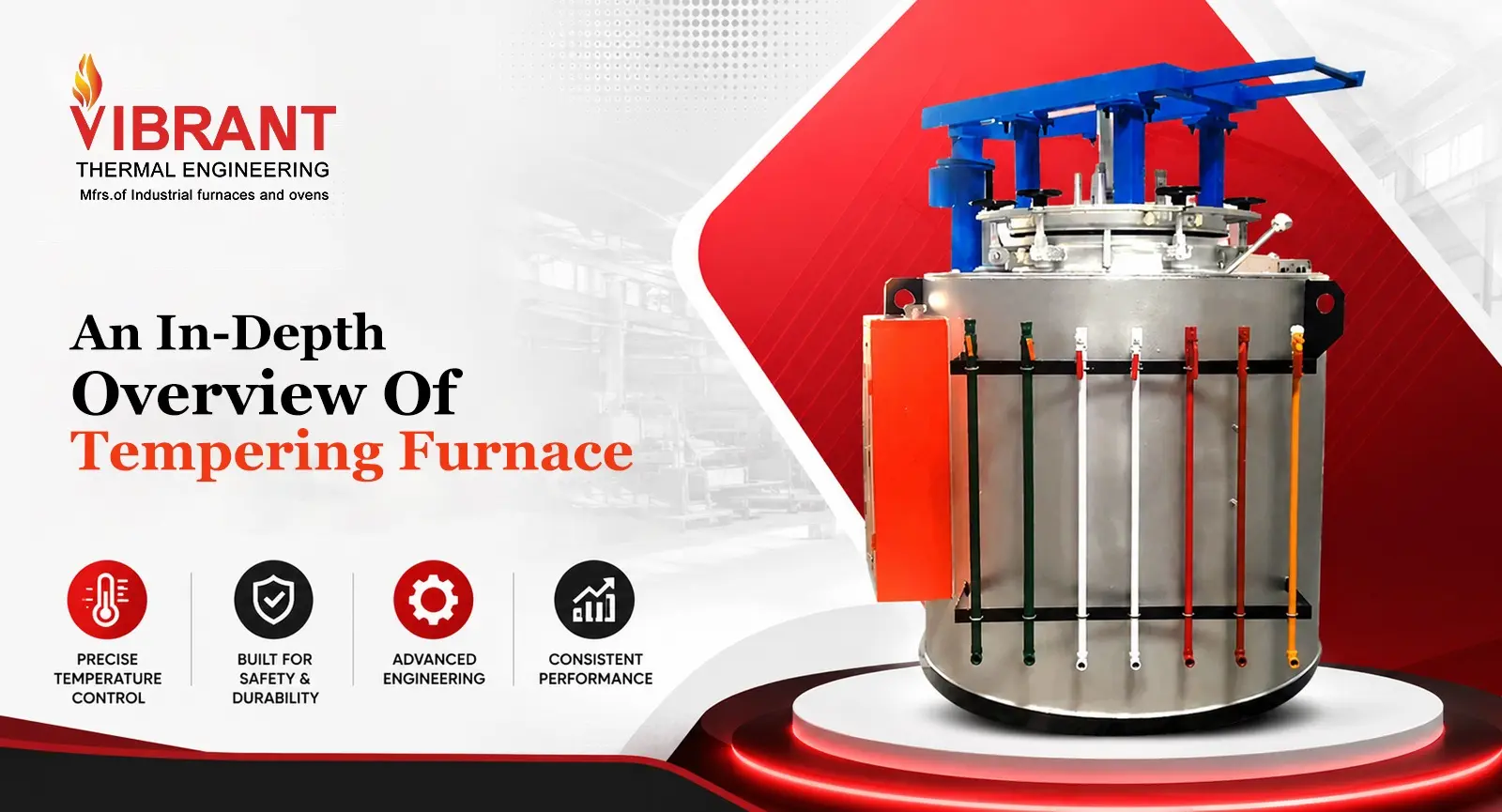
A Closer Look at the Pit Type Tempering Furnace
Among all these types, the pit type furnace stands out for one main reason — it solves a loading problem that most other designs simply weren’t built for. Instead of sitting on the floor and loading from the side or front like a box furnace, a pit type furnace is built into the ground, either fully or partially, so the component is lowered down into the chamber from above rather than pushed in horizontally.
This layout matters more than it might sound:
- Vertical loading works well for long or tall components that would bend or be awkward to slide in sideways
- Crane-assisted loading from above means heavy forgings and castings don’t need to be manually maneuvered into a tight opening
- Less floor space is used compared to a horizontal furnace of similar capacity, since much of the structure sits below ground level
- More even heat distribution is possible around the full length of a long component, since it’s suspended rather than resting on a surface
For manufacturers dealing with shafts, gears, large forgings, or turbine parts, a pit type tempering furnace often ends up being the only practical option once component size crosses a certain point.
Why the Pit Design Works So Well for Heavy Components
The pit design isn’t just about saving floor space — it directly addresses a few practical headaches that come with heat-treating large or heavy metal parts.
- Long components like shafts or rods can be lowered in vertically without bending under their own weight, which can happen with horizontal loading
- Heavy forgings and castings are easier to handle with overhead crane systems than with side-loading mechanisms
- Uniform temperature control matters more for large parts, since uneven heating can cause warping or inconsistent hardness across the piece
- Batch processing becomes more practical, since multiple parts can often be loaded together depending on the pit’s depth and diameter
This is part of why the pit type tempering furnace has remained a standard choice in heavy engineering, even as furnace technology overall has evolved quite a bit.
Where These Furnaces Are Actually Used
Tempering furnaces, and pit type designs in particular, show up across a fairly wide range of industries wherever metal components need to be strong without being brittle.
- Automotive manufacturing — connecting rods, crankshafts, axles, and transmission shafts
- Aerospace — turbine components and structural parts needing consistent mechanical properties
- Tool manufacturing — tool steels that need a precise balance of hardness and toughness
- Heavy engineering — large forgings, gears, and machinery parts
- Metal fabrication — welded structures that need stress relieving alongside tempering
Any industry dealing with long or heavy steel components tends to run into the same loading challenges, which usually pushes them toward a pit-style furnace over a conventional horizontal one.
Gas-Fired vs Electric — Which One Fits Which Type
Most of these furnace types, including pit designs, are available in two heating configurations, and the right one depends on the facility more than the furnace type itself.
- Gas-fired furnaces tend to heat up faster and suit continuous, high-volume operations where fuel access isn’t a concern
- Electrically heated furnaces usually offer more precise temperature control and are easier to install without existing gas infrastructure
Neither is universally better — it comes down to what’s already available at your facility and how tightly you need to control temperature for your specific application.
Final Word
A tempering furnace, in whatever form it takes, exists to solve one core problem — restoring toughness to metal that hardening alone leaves too brittle to use safely. Among the different designs, the pit type tempering furnace continues to hold its place for long and heavy components, mainly because its vertical, crane-loaded layout handles sizes and weights that other furnace types struggle with. For businesses looking for a dependable manufacturing partner, Vibrant Thermal Engineering supplies industrial furnaces built for a wide range of industrial requirements.
FAQs
It’s used to temper metal components after hardening, restoring toughness and flexibility while keeping most of the hardness intact, particularly for long or heavy parts.
A pit furnace is installed below ground level and loads components vertically from above, while box or continuous furnaces load horizontally or move parts through on a conveyor.
Most furnaces operate somewhere between 150°C and 750°C, depending on the specific metal and mechanical properties required.
They’re commonly used in automotive, aerospace, tool manufacturing, and heavy engineering industries for processing shafts, gears, and large forgings.
It depends on the facility — gas-fired furnaces often heat faster and suit high-volume operations, while electric furnaces typically offer more precise temperature control.
Hardened steel is often too brittle to use safely, and tempering restores toughness and reduces the risk of cracking under stress.
A box furnace loads horizontally from the front and suits smaller batches, while a pit furnace loads vertically from above and is built for long or heavy components.

Vibrant Thermal Engineering
Vibrant Thermal, established in 2007, is a leading industrial furnaces & ovens manufacturing organization that offers a one-stop solution to every industrial furnaces & ovens need.
